
Virat Kohli took a deliberate two-month pause after a busy stretch and headed to London for focused training. On return he looked light on his feet during shuttles and net sessions. Andy Flower who has watched him closely called him super fit and hungry. Kohli himself has spoken about how breaks keep him mentally fresh and excited to compete again.
This is the difference between “match fitness” and “physical priming.” Match fitness comes from playing games and sharpening skills under pressure. Physical priming rebuilds the engine mobility metabolic efficiency and recovery capacity away from the weekly grind of travel matches and recovery cycles.
At 37 Kohli’s body has thousands of high-intensity deliveries fielding efforts and gym sessions behind it. A block dedicated to high-quality work under coaches like Naeem Amin allowed him to address small deficits in hip mobility core stability and aerobic base without the fatigue of constant competition. The result is the same explosive drives and flicks but with visibly better agility when turning for quick singles or diving in the field.
He has long emphasized discipline in diet sleep and daily movement. That consistency shows in how he maintains low body fat and high work capacity even as the calendar pages turn. The viral clips of him casually flexing abs during practice are less about vanity and more about the visible outcome of years of habits that prioritize recovery as much as effort.
For everyday runners this is a useful reminder. Sometimes the best training decision is structured time away from race-pace efforts. A focused block on mobility strength and easy volume can recharge the system and reduce the risk of the small niggles that accumulate after 35. Kohli turned potential downtime into a performance edge and still delivered an unbeaten half-century in the season opener.
The Marathoner’s Takeaway: Power-to-Weight Ratio in Cricket and on the Road
Both players illustrate a principle that translates directly from the cricket pitch to the marathon course: power-to-weight ratio. In simple terms it is how much useful force or speed you can generate relative to the mass you have to move.
In T20 cricket a quick single or a sprint to the boundary demands rapid acceleration and deceleration. Extra weight slows that process and raises injury risk during repeated efforts. Rohit’s leaner frame lets him generate bat speed with less effort on the twist and move between wickets more efficiently. Kohli’s agility helps him steal runs that heavier or stiffer athletes might leave on the field.
For runners the same math applies. On flat roads or gentle undulations lower body weight improves running economy because you lift and propel less mass with each stride. Research and coaching experience show that modest fat loss while maintaining or slightly increasing power output often yields noticeable gains in pace or endurance without requiring huge increases in weekly mileage. Think of it as upgrading your engine while lightening the car.
That said lighter is not automatically better if it comes at the cost of strength or fuel stores. Crash diets or excessive deficit training can weaken muscles impair hormone balance and slow recovery. Elite athletes like Rohit and Kohli work with professional teams nutritionists and physiotherapists who monitor blood markers hormones and movement patterns. The rest of us should do the same. Any significant body-composition change especially past 35 needs guidance to avoid unintended setbacks.
Why Mobility Metabolic Health and Recovery Matter More After 35
Age brings natural shifts. Muscle mass can decline if not actively maintained. Recovery between hard sessions slows. Joint cartilage wears and inflammation can creep in. The smartest athletes adjust their training to counter these realities rather than ignore them.
Mobility work keeps hips ankles and thoracic spine moving freely which helps both cricketers and runners transfer force efficiently and avoid compensatory patterns that lead to injury. Metabolic health good blood-sugar control and efficient fat utilization supports steady energy during long matches or long runs and aids recovery overnight. Quality sleep and active recovery strategies become non-negotiable because they allow the body to adapt rather than just accumulate fatigue.
Rohit and Kohli appear to have embraced this holistic view. Their recent performances suggest the investment is paying off in both explosive output and the ability to sustain it across a demanding IPL schedule.
To make the differences and common threads easier to see here is a side-by-side look at how the two Indian stars have approached their 35-plus renaissance.
| Aspect | Rohit Sharma | Virat Kohli | Marathoner Takeaway |
|---|---|---|---|
| Age in IPL 2026 | 38 | 37 | Both prove targeted changes can extend peak performance well past 35 |
| Reported Weight Shift | Dropped ~11-15 kg (from ~85 kg to ~70 kg) | Maintained lean build with visible sharpening | Even modest fat loss improves power-to-weight ratio and cuts joint load |
| Core Training Focus | Leaning down for endurance + explosive power | Dedicated 2-month London block for mobility and priming | Structured blocks away from competition rebuild the engine without burnout |
| Visible On-Field Change | Quicker footwork lighter rotation sharper running between wickets | Exceptional agility light on feet during shuttles and quick singles | Lighter efficient movement helps whether stealing a single or holding marathon pace |
| Recovery Emphasis | Cleaner diet reduced overall load on back and knees | High-quality sleep consistent habits active recovery | Prioritise recovery as much as hard work especially after 35 |
| Performance Outcome | Blistering 78 off 38 in opener with effortless sixes | Composed unbeaten 69 off 38 showing sustained sharpness | Sustainable changes deliver both speed and staying power |
A Final Note for Everyday Athletes
Watching these two Indian greats reinvent their bodies at 35-plus is inspiring but it is worth repeating: elite results require professional supervision. What works under the watchful eye of a full support staff may need careful scaling for someone balancing a job family and weekend long runs.
Start with small sustainable changes. Prioritize protein and nutrient-dense meals to protect muscle during any fat-loss phase. Include strength sessions that target the posterior chain and core. Add mobility drills most days. Monitor how your body responds rather than chasing scale numbers alone. And remember that consistency over years beats short-term extremes.
Rohit’s blazing 78 and Kohli’s composed 69 in their respective openers were not accidents. They were the public result of private work focused on moving better feeling lighter and recovering smarter. For fat marathoners and weekend warriors the message is encouraging. Age is just a number when you treat your body like the high-performance machine it can still be.
Important disclaimer: The training nutrition and recovery approaches described here reflect publicly reported habits of professional athletes. Individual needs vary widely. Consult qualified coaches physicians and nutrition professionals before making significant changes to your own routine especially if you have existing injuries or health conditions. Safe progress beats rapid transformation every time.
Related posts:
 What we can learn from Virat Kohli’s workout session
 Tilak Varma’s Fitness Secrets: Lessons for Runners & Fitness Enthusiasts
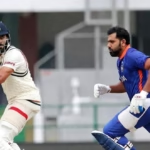 IPL 2026 Inspiration: 5 Endurance Lessons from Virat Kohli, Rohit Sharma & Other Cricketers Every Runner Can Apply
 Unlocking the Secrets of Fitness: The Inspiring Journey of Vaibhav Suryavanshi