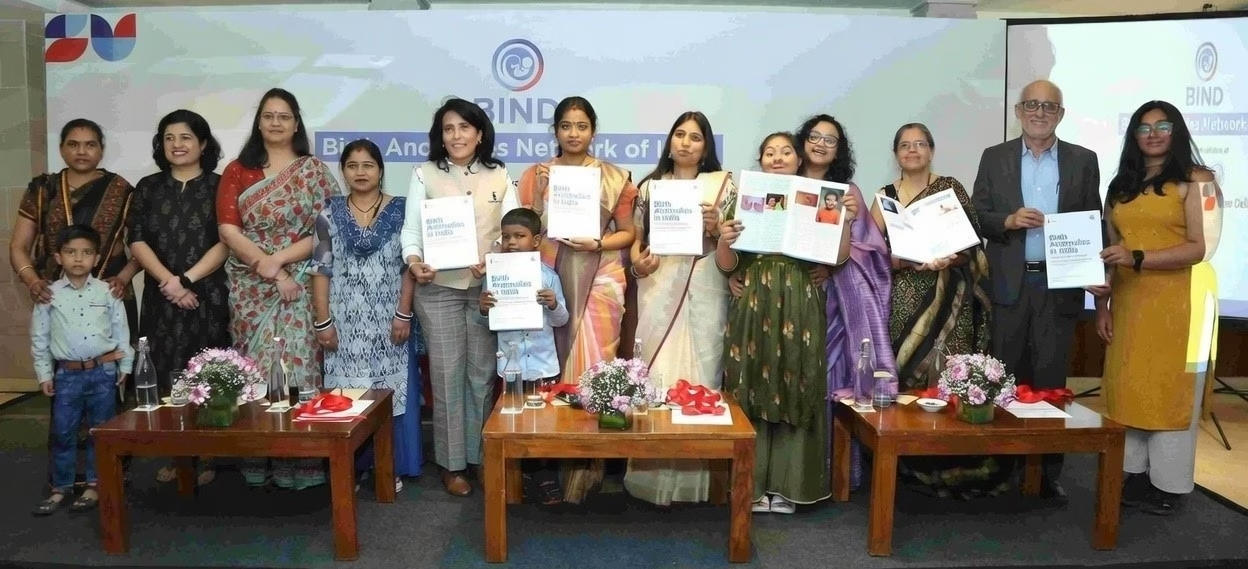
New Delhi, March 3, 2026 — In a major step to tackle the often-overlooked public health challenge of birth anomalies, Smile Train India and the Birth Defects Research Foundation have jointly launched the Birth Anomalies Network of India (BIND), the country’s first national multi-stakeholder forum dedicated to improving prevention, early detection, treatment, and lifelong care for children born with congenital conditions.
The initiative was officially unveiled on March 2, 2026, at the India Habitat Centre in New Delhi, coinciding with the start of Birth Defects Awareness Month in March. The event brought together healthcare professionals, researchers, policymakers, civil society organisations, and families affected by birth anomalies. A key highlight was the release of a whitepaper outlining a roadmap for a proposed National Birth Anomalies Task Force and related policy recommendations.
India sees nearly 26 million births each year, with an estimated 600,000 newborns affected by birth anomalies annually. These conditions now contribute significantly to infant mortality and long-term disabilities, especially as deaths from infectious diseases decline. Recent estimates indicate that India accounts for about 16% of global deaths linked to birth defects, and roughly one in 44 children is affected. Yet, the country lacks a comprehensive national registry or unified surveillance system, leading to fragmented care, delayed interventions, and insufficient data for evidence-based policymaking.
BIND aims to bridge these gaps by uniting stakeholders from government, medical institutions, research bodies, and civil society. Its priorities include strengthening surveillance and data collection, promoting preventive strategies, raising awareness about anomaly scans and newborn screening, ensuring timely access to quality multidisciplinary treatment, and advocating for coordinated, evidence-informed policies.
At the heart of the network is a push for a National Birth Anomalies Registry — a proposed system to generate reliable nationwide data, pinpoint preventable risk factors, and support equitable allocation of resources.
Mamta Carroll, Vice President and Regional Director, Asia, Smile Train, emphasized the long-standing neglect of the issue in public discourse. “Birth anomalies have remained under-recognised for far too long,” she said at the launch. “BIND aims to create a unified platform that brings together clinicians, researchers, caregivers, policymakers, and civil society around a shared national purpose. Our vision is to foster a more enabling and inclusive environment where every child born with a birth anomaly receives timely information, quality treatment, rehabilitation, and long-term support — and every family is empowered with the care and dignity they deserve.”
Dr. Anita Kar, Director of the Birth Defects Research Foundation (Pune), pointed to the critical data and research shortfall. “India lacks robust nationwide data on the true burden, causes, and long-term outcomes of birth anomalies,” she noted. “Without strong surveillance and registry systems, policies remain fragmented and reactive. Children with congenital conditions require integrated, multidisciplinary care — from early diagnosis to safe, sustained, and comprehensive support — backed by sustained public investment and evidence-based planning.”
The launch has been welcomed as a timely collective effort to give birth anomalies greater visibility and priority in India’s healthcare agenda, moving away from siloed approaches toward a coordinated national response.
This development comes amid growing calls for stronger newborn screening, early referral systems, and full societal inclusion of individuals with congenital conditions. BIND positions itself as a platform to drive these changes through collaboration and advocacy.


