
Last updated: September 2026
Running Through Pollution Season
Training through October to January in north India means navigating AQI levels that can swing dramatically day to day. Our guide breaks down exactly at what AQI levels it is safe to run outdoors in India, when to move indoors and why early morning may not be your cleanest window.
The best running shoe for most Indian runners in 2026 is the ASICS Gel-Contend 9 (~₹4,799) — durable enough for our roads, cushioned enough for half marathon training, and priced where you won’t cry when the outsole finally gives up. If your budget stretches to the premium tier, the Nike Pegasus 42 (~₹12,995) is the most complete daily trainer you can buy in India right now, and the Puma Deviate Nitro 4 (~₹16,999) is the plated race-day pick. Everything below is organised by budget — under ₹5,000, ₹5,000–₹10,000, and ₹10,000+ — with a full comparison table at the end.
I’ve been running Delhi’s roads, parks and the occasional Himalayan climb for over a decade — Lodhi Garden loops on weekday mornings, long runs through Defence Colony, and races from the Delhi Half to the Ladakh Marathon. In that time I’ve bought shoes at every price point, from sub-₹1,000 pairs in my early days to premium trainers that cost more than my first race entry fee. This guide is everything I wish someone had told me before my first shoe purchase: how to choose, what actually matters in Indian conditions, and which specific shoes are worth your money in 2026 — from genuine budget picks to the premium tier.
How Do I Choose the Right Running Shoe? My 4-Question Framework
Walk into any shoe store (or open Amazon) and you’ll drown in foam names and marketing acronyms. Ignore all of it for a minute. After a decade of buying — and mis-buying — running shoes, I’ve boiled the decision down to four questions.
1. How many kilometres do you run per week?
Under 15 km/week: any well-cushioned budget trainer works — you don’t need premium foam for three easy runs a week. 15–40 km/week: this is where midsole quality starts to matter; a mid-range or entry-premium daily trainer will protect your legs over months of accumulating mileage. 40+ km/week (marathon training): invest in the premium tier, and ideally rotate two pairs — a cushioned daily trainer plus a lighter shoe for faster sessions. Your shoes take roughly 700–900 steps per kilometre; at marathon-training volume, midsole quality is injury prevention, not luxury.
2. What surface do you run on?
Most Indian city runners live on a mix of concrete pavement, tarmac and park trails — some of the hardest surfaces in the world to run on daily. Concrete demands more cushioning and a durable outsole. If you run mostly in parks like Lodhi Garden with packed-earth paths, you can get away with a firmer, lighter shoe. Genuine trail running (rocks, mud, hills) needs a dedicated trail shoe — that’s a separate guide.
3. Are you a neutral runner or an overpronator?
Look at the sole of your current worn-in shoes. Even wear across the forefoot = neutral — the vast majority of shoes in this guide will suit you. Heavy wear on the inner edge = overpronation — your ankle rolls inward, and a stability shoe like the Saucony Omni 22 (reviewed below) adds structure to correct it. If you have flat feet, start with my dedicated guide to running shoes for flat feet in India.
4. What’s your honest budget?
Here’s the truth the shoe industry won’t tell you: a ₹4,000 shoe covers 80% of what a ₹20,000 shoe does for a recreational runner. The premium tier buys you lighter weight, bouncier foam, plated propulsion and longer midsole life — real benefits, but marginal ones until your mileage justifies them. Buy the best shoe in the budget you can spend without guilt, because you’ll need to replace it in 500–800 km anyway.
What Makes a Running Shoe Right for Indian Conditions?
Global shoe reviews are written for runners in 15°C weather on smooth asphalt. Delhi in May is 42°C on concrete that’s been baking since sunrise. Four things I’ve learned matter disproportionately here:
Breathability beats everything in summer. An engineered mesh upper isn’t a nice-to-have — between April and September it’s the difference between finishing your long run and cooking your feet. Knit uppers look great but run hot.
Outsole rubber wears fast on Indian concrete. Our pavements are abrasive, and exposed-foam outsoles (common on premium lightweight shoes) shred quickly. Look for full-contact rubber coverage if you run on roads daily.
Buy a half size up. Feet swell in heat, and Indian summers swell them more. Every shoe I recommend below, I’d buy half a size larger than your casual sneakers. Your toenails will thank you at kilometre 18.
Monsoon grip is real. If you run through July–September, wet-surface traction matters. Softer rubber compounds grip better on wet marble-tile pavements (a uniquely Indian hazard outside every market complex).
Best Budget Running Shoes in India Under ₹5,000 (2026)
This is where most Indian runners shop, and honestly, where the smartest money is spent. Every shoe here can carry you through a 10K training block; the top two can handle half marathon training.

ASICS Gel-Contend 9
The highest-rated shoe on this entire list, budget or premium — and it earns it. ASICS’ rearfoot GEL cushioning takes the sting out of concrete landings, the mesh upper breathes well through Indian summers, and the outsole rubber outlasts most shoes at twice the price. If you’re buying your first serious running shoe, start here.
Check Price on Amazon →
adidas Pureboost
Genuine Boost midsole foam — adidas’ premium cushioning technology — at a budget price is the entire story here. It’s slightly heavier than the Contend 9 and the knit upper runs warmer, but the ride is noticeably springier. A great pick if your runs double as everyday wear, because it looks the part off the road too.
Check Price on Amazon →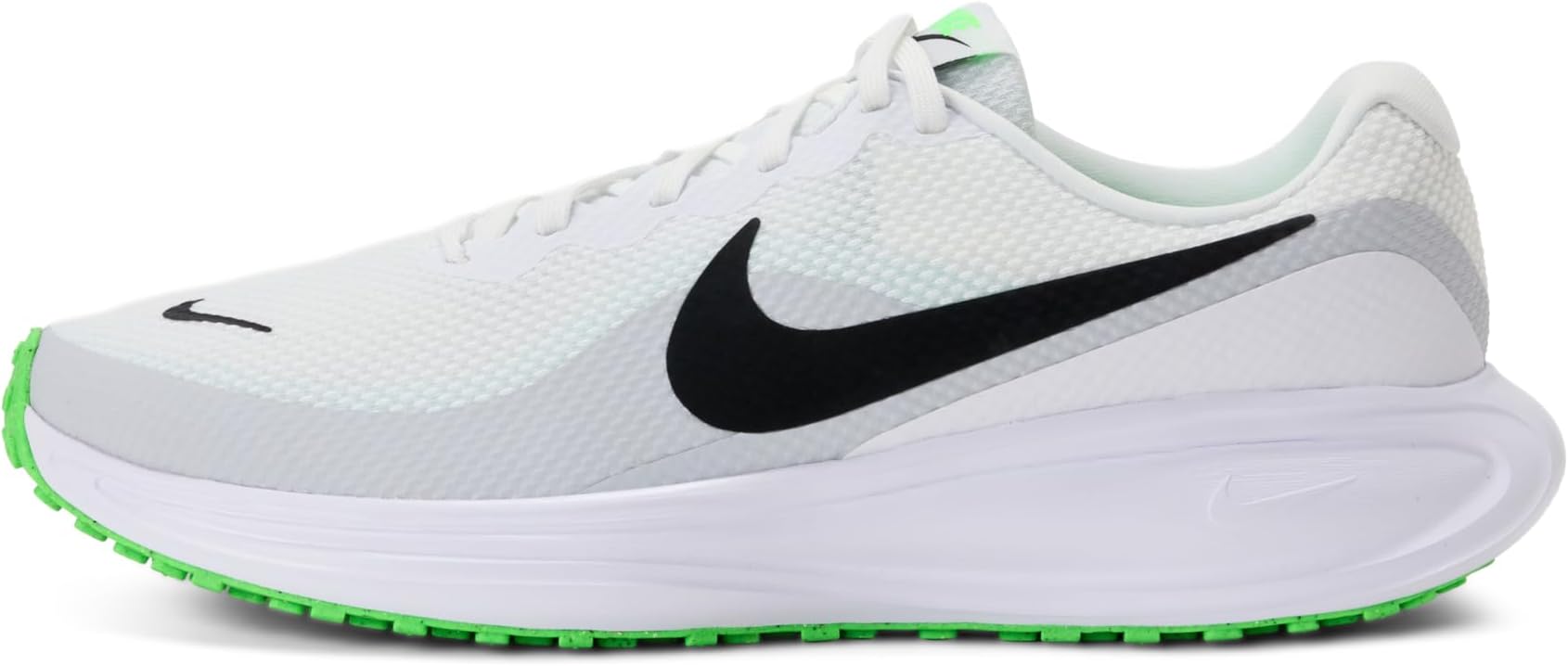
Nike Revolution
Nike’s entry-level trainer is light, simple and honest. The foam is firmer than the Contend 9 — fine for runs up to 10K, less forgiving on long runs. Where it wins is weight and fit: it disappears on your foot in a way few budget shoes do. Best for beginners building the running habit three or four days a week.
Check Price on Amazon →
adidas Duramo RC2
The best running shoe under ₹3,000 in India, full stop. The Duramo line has quietly become adidas’ workhorse for Indian runners — light, well-ventilated mesh, adequate cushioning for runs up to 10–12K, and a price that lets you replace it guilt-free every season. If the Contend 9 stretches your budget, buy this and spend the difference on race entries.
Check Price on Amazon →
Campus Hurricane
Let’s be honest about what ₹999 buys: a shoe for starting out, not for training blocks. And that’s fine — the Hurricane is comfortable for walk-run programs and easy 5Ks, and Campus’ fit suits wider Indian feet better than most imports. If cost is the thing standing between you and your first run, this removes the excuse. Upgrade once you’re running thrice a week.
Check Price on Amazon →
Nivia Marathon
The homegrown alternative at the same sub-₹1,000 price point. Nivia has decades of Indian sports-gear pedigree, and the Marathon is a no-nonsense starter shoe — firm ride, tough outsole, honest construction. Same caveat as the Campus: it’s a gateway shoe. But supporting an Indian brand while you find out whether running sticks? No complaints from me.
Check Price on Amazon →Best Mid-Range Running Shoes in India: ₹5,000–₹10,000
The ₹5,000–₹10,000 band is the sweet spot for serious recreational runners — this is where premium midsole technology arrives without the premium tax. If you run 20–40 km a week and want one shoe that does everything, shop here.

Puma Velocity Nitro 4
The Velocity Nitro line has been the best value-for-performance shoe in India for three generations running, and the 4 continues it. Nitrogen-infused NITROFOAM gives a light, responsive ride that handles everything from easy runs to tempo sessions, and PUMAGRIP is genuinely the best wet-weather outsole rubber in the business — a monsoon blessing. This is the one shoe I’d recommend to a half marathoner who wants a single do-it-all trainer.
Check Price on Amazon →
adidas Ultraboost
The Ultraboost is the most comfortable shoe on this list to simply be in — a full-length Boost midsole and a sock-like Primeknit upper that’s earned its cult following. As a pure running tool it’s heavier and less responsive than the Velocity Nitro 4, so I’d point speed-focused runners elsewhere. But for easy-pace runners, heavier runners who want maximum cushioning, and anyone whose shoe pulls double duty at brunch — it’s superb.
Check Price on Amazon →Best Premium Running Shoes in India: ₹10,000 and Above
Above ₹10,000 you’re buying specialisation: lighter weights, superfoams, carbon-adjacent plates, and midsoles that stay lively past 600 km. If you’re marathon training at 40+ km a week, this tier is where your money starts working as injury insurance.

Nike Air Zoom Pegasus 42
Forty-two generations of refinement show. The Pegasus is the world’s default daily trainer for a reason: ReactX foam with an Air Zoom unit gives a ride that’s cushioned on easy days and responsive when you push, the fit suits the widest range of feet of any premium shoe, and the outsole survives Indian roads. If you’re buying one premium shoe to do everything — this is it, and its 4.7 rating from Indian buyers agrees.
Check Price on Amazon →
Puma Deviate Nitro 4
The highest-rated premium shoe on this list. The Deviate Nitro 4 pairs Puma’s NITROFOAM Elite with a carbon-composite PWRPLATE — genuine plated propulsion in a shoe stable and durable enough to train in, which pure carbon racers are not. If you’re chasing a personal best at the Delhi Half or Tata Mumbai and want one shoe for tempo days and race day, this is the smartest plated buy in India right now.
Check Price on Amazon →
ASICS Gel-Nimbus 26
Here’s a premium-tier secret: with the Nimbus 27 on shelves, the 26 is now discounted to ₹11,399 — plush FF BLAST PLUS ECO cushioning and PureGEL comfort at nearly half its launch price. The Nimbus is ASICS’ flagship comfort trainer, built for eating long, slow kilometres. Heavier runners and anyone whose knees complain on concrete should look here first. Prior-generation flagships are the best value play in premium running shoes, and this is the proof.
Check Price on Amazon →
New Balance Fresh Foam X 1080 v14
The most luxurious ride money can buy in India. Fresh Foam X delivers deep, pillowy cushioning that makes 30 km Sunday runs feel shorter, and New Balance’s generous fit (with actual width options) is a gift for broader Indian feet that get squeezed by Nike and ASICS lasts. It’s the most expensive shoe in this guide, and it’s a specialist — buy it as the long-run shoe in a rotation, not as your only trainer.
Check Price on Amazon →
Saucony Omni 22
The only true stability shoe in this guide, and the pick if question 3 of my framework flagged you as an overpronator. The Omni 22 uses guidance-frame support to gently correct inward ankle roll — critical for runners with flat arches logging serious mileage, where uncorrected overpronation becomes shin splints and knee pain. It’s expensive and it’s niche; but if you need stability, you need it, and this is the best executed option sold in India.
Check Price on Amazon →Budget vs Mid-Range vs Premium: Full Comparison Table (2026)
| Shoe | Tier | Price* | Rating | Best For | Link |
|---|---|---|---|---|---|
| Nivia Marathon | Budget | ₹996 | ⭐ 4.1 | First-ever running shoe, Indian brand | Amazon → |
| Campus Hurricane | Budget | ₹999 | ⭐ 4.2 | Walk-run beginners, wide feet | Amazon → |
| adidas Duramo RC2 | Budget | ₹2,939 | ⭐ 4.2 | Best value under ₹3,000, daily 5–10K | Amazon → |
| Nike Revolution | Budget | ₹4,295 | ⭐ 4.1 | Lightweight beginner trainer | Amazon → |
| adidas Pureboost | Budget | ₹4,514 | ⭐ 4.2 | Run-commute, Boost foam on a budget | Amazon → |
| ASICS Gel-Contend 9 | Budget | ₹4,799 | ⭐ 4.6 | Best budget shoe overall, 10K–half marathon | Amazon → |
| Puma Velocity Nitro 4 | Mid-Range | ₹8,399 | ⭐ 4.1 | Best all-round daily trainer, monsoon grip | Amazon → |
| adidas Ultraboost | Mid-Range | ₹8,500 | ⭐ 4.5 | Max comfort, easy runs + lifestyle | Amazon → |
| ASICS Gel-Nimbus 26 | Premium | ₹11,399 | ⭐ 4.3 | Plush long runs, prior-gen value buy | Amazon → |
| Nike Pegasus 42 | Premium | ₹12,995 | ⭐ 4.7 | Best premium daily trainer, all distances | Amazon → |
| Puma Deviate Nitro 4 | Premium | ₹16,999 | ⭐ 4.8 | Plated tempo + race day, PB hunting | Amazon → |
| Saucony Omni 22 | Premium | ₹20,167 | ⭐ 4.1 | Stability for overpronators, flat feet | Amazon → |
| New Balance 1080 v14 | Premium | ₹23,163 | ⭐ 4.5 | Max-cushion marathon long runs, wide feet | Amazon → |
*Prices are indicative Amazon India prices at the time of writing (July 2026) and change frequently with sales. Ratings are Amazon India customer ratings.
When Should I Replace or Upgrade My Running Shoes?
Replacement: Most running shoes are done between 500 and 800 km — budget shoes at the lower end, premium foams at the higher end. You’ll feel it before you see it: the midsole stops bouncing back, landings feel harder, and mysterious new aches show up in your knees and shins. Track your shoe mileage in your running watch app (Garmin, COROS and Suunto all support gear tracking) — it’s the single most underused feature in running tech.
Upgrading tiers: Move up when your training outgrows your shoe, not before. Running 10 km a week in a ₹20,000 shoe is burning money; running 60 km a week in a ₹3,000 shoe is burning your legs. The honest progression for most runners: start budget, move to mid-range when you commit to a half marathon, and add a premium pair (or a rotation) when marathon training begins.
Rotation: Once you’re past 40 km a week, two pairs beat one — a cushioned trainer for easy/long days and a lighter, faster shoe for workouts. Shoes last longer when foam gets 48 hours to decompress between runs, and your legs benefit from varied stimulus. A Contend 9 + Velocity Nitro 4 rotation costs less than one super shoe and covers everything.
Running Shoe FAQs: Quick Answers for Indian Runners
Which running shoe brand is best in India?
No single brand wins every category. ASICS leads in durable budget trainers and plush cushioning, Puma offers the best value in performance foams and wet grip, Nike makes the most versatile premium daily trainer (Pegasus), New Balance fits wide feet best, and Campus/Nivia own the entry-level segment. Buy the shoe, not the logo.
Is a ₹1,000 running shoe good enough to start running?
Yes — for walk-run programs and easy 5Ks, shoes like the Campus Hurricane or Nivia Marathon are genuinely fine. The moment you’re running three or more days a week, upgrade to something with a real cushioning midsole (₹3,000+) to protect your joints on Indian concrete.
Should I buy running shoes a size bigger in India?
Buy half a size larger than your casual shoes. Feet swell during runs — more so in Indian heat — and you need a thumb’s width of space ahead of your longest toe. Cramped toe boxes are the number one cause of black toenails on long runs.
Are expensive running shoes worth it for marathon training?
At 40+ km per week, yes. Premium midsoles retain cushioning longer, weigh less, and reduce cumulative impact over hundreds of training kilometres — that’s injury prevention, not luxury. Below 20 km a week, a good budget or mid-range trainer delivers 80% of the benefit at a quarter of the price.
Can I use running shoes for gym workouts too?
For treadmill runs and general cardio, absolutely. For heavy lifting, no — soft running foam is unstable under squats and deadlifts. If you split time between road and gym floor, a firmer budget trainer like the Nike Revolution handles both better than a max-cushion shoe.
Which running shoes are best for the monsoon in India?
Outsole grip matters more than upper material — everything gets wet anyway. Puma’s PUMAGRIP rubber (Velocity Nitro 4, Deviate Nitro 4) is the standout on wet roads and those treacherous marble-tiled pavements. Avoid worn-smooth outsoles in the rain, and stuff shoes with newspaper overnight to dry them.
⭐ The Bottom Line
If you take one thing from this guide: match the shoe to your mileage and budget, not to marketing. Starting out or running under 15 km a week? The ASICS Gel-Contend 9 (₹4,799) — or the adidas Duramo RC2 (₹2,939) if money’s tight — is all the shoe you need. Training seriously for a half or full marathon? The Puma Velocity Nitro 4 (₹8,399) is the best all-rounder in India, and the Nike Pegasus 42 (₹12,995) is the premium pick if the budget allows. Chasing a PB? The Puma Deviate Nitro 4 (₹16,999) is your race-day weapon. Whatever you buy — buy half a size up, replace it around 600 km, and spend what you save on race entries. See you at the start line.
— Anurag Rana, FatMarathoner. Delhi-based runner with 10+ years of road, trail and Himalayan racing, including the Ladakh Marathon. Browse the India Marathon Calendar 2026 to put those new shoes to work.
Looking for Specialized Shoe Recommendations?
If you have specific foot conditions, injury concerns, or target race goals, check out our dedicated deep-dive guides:
- Knee Support: Best Running Shoes for Knee Pain in India
- Flat Feet & Stability: Best Running Shoes for Flat Feet in India
- Race Day & Speed: Best Carbon Plate Running Shoes in India
- Off-Road & Trails: Best Trail Running Shoes Under ₹5,000
- Brand Guides: Best Nike Running Shoes in India | Best Adidas Running Shoes in India
