
Running has surged in popularity across India, from bustling city streets in Mumbai and Delhi to scenic trails in the Himalayas and coastal paths in Chennai. With events like the Tata Mumbai Marathon and Bengaluru 10K drawing thousands, it’s an accessible way to stay fit, build endurance, and connect with communities. However, the repetitive impact of running can lead to injuries, especially in India’s diverse climates—scorching summers, humid monsoons, polluted urban air, and uneven terrains. This guide explores common running injuries, their causes, symptoms, and treatments, while emphasizing prevention strategies tailored to Indian conditions. Whether you’re a beginner lacing up for the first time or a seasoned marathoner, understanding these can help you run smarter and safer.
Understanding Common Running Injuries
Most running injuries stem from overuse, accounting for about 80% of cases, often involving the knee, lower leg, or foot. They typically arise from training errors like sudden increases in mileage, poor form, inadequate footwear, or ignoring recovery. Below, we break down the most frequent ones.
1. Runner’s Knee (Patellofemoral Pain Syndrome)
Runner’s knee is one of the top overuse injuries, causing dull pain around or behind the kneecap. It’s prevalent among runners due to misalignment of the kneecap, weak hips or quads, or overpronation (excessive inward foot roll).
- Causes: Weak core and leg muscles, tight hamstrings, running on hard surfaces, or rapid mileage ramps.
- Symptoms: Aching pain during or after runs, especially when bending the knee (e.g., stairs or sitting prolonged). Swelling or grinding sensations may occur.
- Treatment: Rest, ice, compression, elevation (RICE); anti-inflammatory meds; physical therapy for strengthening exercises like squats and lunges.
- Prevention: Incorporate hip and quad strength training (e.g., clamshells, step-ups). Gradually increase training by no more than 10% weekly. Choose cushioned shoes suited to your gait.
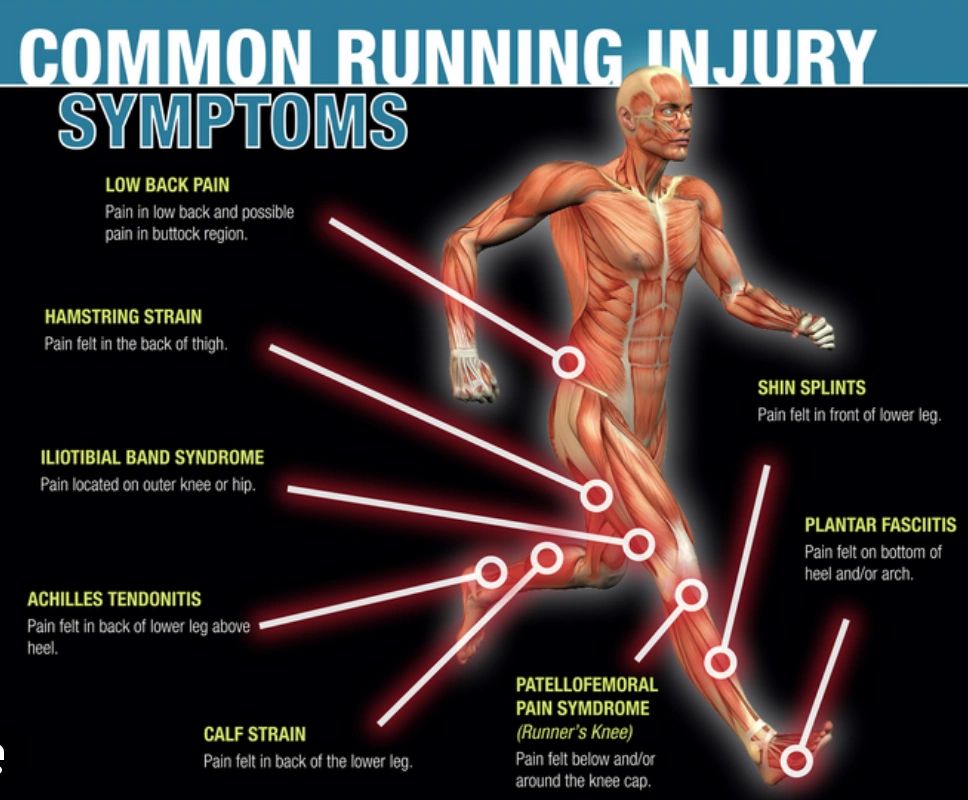
2. Shin Splints (Medial Tibial Stress Syndrome)
This involves inflammation along the inner edge of the shinbone, common in new runners or those increasing intensity.
- Causes: Overuse on hard surfaces, flat feet, or improper shoes. In India, uneven roads and potholes exacerbate this.
- Symptoms: Sharp or throbbing pain along the shin, tenderness, mild swelling. Pain worsens with activity and eases with rest.
- Treatment: RICE method; calf stretches; foam rolling. If persistent, see a doctor to rule out stress fractures.
- Prevention: Build mileage slowly; wear supportive shoes with good arch support. Strengthen calves with heel raises. Avoid running on concrete—opt for tracks or softer paths when possible.
3. IT Band Syndrome (Iliotibial Band Friction Syndrome)
The IT band, a fibrous tissue from hip to knee, gets irritated from friction, leading to outer knee or hip pain.
- Causes: Weak glutes, downhill running, or tight hips. India’s hilly terrains (e.g., in Bengaluru or hilly North India) can aggravate it.
- Symptoms: Burning pain on the knee’s outer side, worsening downhill or after longer runs.
- Treatment: Rest; foam roll the IT band; strengthen glutes with side leg lifts. Physical therapy often helps.
- Prevention: Include glute exercises (e.g., bridges); stretch hips regularly. Vary terrain and avoid repetitive banked roads.
4. Plantar Fasciitis
Inflammation of the plantar fascia, the tissue under the foot’s arch, causing heel pain.
- Causes: Tight calves, high arches, or worn shoes. Running on India’s sandy beaches or hard urban pavements increases risk.
- Symptoms: Stabbing heel pain, especially first steps in the morning or after sitting.
- Treatment: RICE; night splints; roll a frozen bottle underfoot. Orthotics may provide relief.
- Prevention: Stretch calves and feet daily; wear shoes with good cushioning. Strengthen arches with toe curls.
5. Achilles Tendinitis
Irritation of the tendon connecting calf to heel, often from overuse.
- Causes: Sudden speed increases, tight calves, or hill running. Monsoon slippery surfaces in India can strain it.
- Symptoms: Pain and stiffness above the heel, swelling, worse in mornings.
- Treatment: RICE; eccentric heel drops (therapy exercise). Avoid hills during recovery.
- Prevention: Warm up with dynamic stretches; strengthen calves. Gradually introduce speed work.
6. Stress Fractures
Tiny bone cracks from repetitive impact, often in shin or foot.
- Causes: Overtraining, low bone density, or poor nutrition. India’s nutrient-deficient diets (e.g., low calcium) can contribute.
- Symptoms: Localized pain that worsens with weight-bearing, swelling.
- Treatment: Rest (4-8 weeks); boot or crutches if severe. Bone density check recommended.
- Prevention: Cross-train (e.g., swimming); eat calcium-rich foods like dairy or leafy greens. Monitor vitamin D levels, common deficiency in India.
Overstride and Running Injuries: Breaking the Cycle for a Healthier Run: Princeton Sports and Family Medicine, P.C.: Sports Medicine
Other notable injuries include hamstring strains (pain in thigh back from sprints) and calf pulls (from uneven terrain), treated similarly with RICE and gradual return.
India-Specific Challenges and Prevention Strategies
India’s unique environment amplifies injury risks. Heat, humidity, pollution, and infrastructure pose distinct threats.
Heat and Humidity
With summers hitting 40°C+ in many regions, heat stress leads to dehydration, cramps, exhaustion, or stroke. Humid monsoons reduce sweat evaporation, raising core temperature.
- Prevention Tips: Run early morning or evening when cooler. Hydrate with water and electrolytes—aim for 500ml/hour during runs. Wear moisture-wicking, UV-protective clothing. Acclimatize by starting short in heat; take breaks in shade. In humid areas like Kerala or Mumbai, monitor wet-bulb globe temperature apps to avoid extreme conditions.
What To Wear on Your Run Based on the Temperature. Nike.com
Air Pollution
Urban smog in Delhi, Mumbai, or Kolkata reduces lung function, increases asthma risk, and strains the heart during runs. High AQI levels (often 200+) can cause respiratory issues or even fatalities in marathons.
- Prevention Tips: Check AQI via apps like SAFAR; run indoors on treadmills or in gyms when AQI >150. Opt for green zones like parks. Wear pollution masks if outdoors. In winter pollution peaks, shift to low-impact alternatives like yoga.
Uneven Terrain and Infrastructure
Potholed roads, crowded sidewalks, and rural trails increase ankle sprains or falls. Monsoon mud adds slip risks.
- Prevention Tips: Choose well-maintained paths or tracks. Invest in trail shoes for off-road runs. Improve balance with yoga or proprioception exercises. Run with groups for safety in low-light areas.
General Prevention Tips for All Runners
To minimize injuries universally:
- Training Smart: Follow the 10% rule for mileage increases. Include rest days and cross-training (cycling, swimming).
- Footwear and Gear: Get gait analyzed at stores; replace shoes every 500-800km. Use orthotics if needed.
- Strength and Flexibility: Weekly sessions for core, hips, and legs. Yoga is ideal for Indian runners, enhancing flexibility.
- Nutrition and Recovery: Balanced diet with proteins, carbs, and micronutrients. Sleep 7-9 hours; use foam rollers for self-massage.
- Listen to Your Body: Pain is a signal—don’t push through. Consult physiotherapists or doctors early.
| Injury | Key Prevention Exercise | Frequency |
|---|---|---|
| Runner’s Knee | Squats/Lunges | 3x/week |
| Shin Splints | Calf Raises | Daily stretches |
| IT Band Syndrome | Glute Bridges | 3x/week |
| Plantar Fasciitis | Foot Rolls (with ball) | Morning routine |
| Achilles Tendinitis | Eccentric Heel Drops | 2x/day |
| Stress Fractures | Cross-Training | 1-2x/week |
Conclusion
Running in India offers incredible rewards—physical health, mental clarity, and community spirit—but demands respect for your body and environment. By addressing common injuries through proper training, gear, and India-specific adaptations, you can enjoy injury-free miles. Start slow, stay consistent, and consult professionals if issues arise. Lace up, stay hydrated, and hit those roads safely—happy running!