There is something darkly ironic about pollution season in north India. It arrives exactly when the running calendar fills up. October to January is when you train hardest, when the big city races are on and when the air across the Indo-Gangetic Plain is at its most dangerous. The weather finally cooperates. The air does not.
This guide gives you a clear, practical framework using India’s National Air Quality Index so you can make informed decisions about every run from October through February. No guesswork. No vague advice about “listening to your body.”
Running in Air Pollution: At a Glance
- Safe to run freely: AQI below 100 (Good to Satisfactory on the Indian scale)
- Modify your training: AQI 101 to 200 (Moderate)
- Avoid outdoor running: AQI above 200 (Poor, Very Poor or Severe)
- Worst months: October to January across north India
- Most affected cities: Delhi NCR, Lucknow, Kanpur, Agra, Patna, Faridabad, Ghaziabad
- Apps to check AQI: Sameer (CPCB), IQAir, AQI India
Why Running in Polluted Air Is More Dangerous Than Almost Any Other Outdoor Activity
Most people judge air pollution by how it feels while standing at a bus stop or sitting in traffic. Runners are a different case entirely. At an easy pace, your breathing rate climbs to 40 to 60 litres of air per minute. That is five to ten times what you inhale at rest. At tempo pace or during intervals, it climbs further still.
This matters because the total volume of polluted air passing through your lungs during a one-hour run is orders of magnitude higher than what a non-runner breathes in the same hour outdoors. You are also breathing through your mouth at any real intensity, bypassing the nose’s natural filtration system completely.
The main threat is PM2.5, fine particulate matter smaller than 2.5 micrometres in diameter. These particles are small enough to cross from the lungs directly into the bloodstream. Repeated exposure at high concentrations is linked to cardiovascular stress, reduced aerobic capacity over time and elevated systemic inflammation. For a runner training specifically to improve health, this is a genuine trade-off worth taking seriously.
How to Read India’s Air Quality Index as a Runner
India uses the National Air Quality Index (NAQI), which runs from 0 to 500 and is published in real time by the Central Pollution Control Board. The Sameer app is the official source. IQAir and AQI India also display the NAQI alongside international benchmarks and are useful for hyperlocal readings.
The composite AQI number is calculated from multiple pollutants including PM10, PM2.5, NO2, SO2 and ozone. In north Indian cities during winter, PM2.5 is almost always the dominant pollutant and the figure that matters most for your lungs while running. Where an app lets you isolate PM2.5 separately, look at that number alongside the overall AQI.
One important caveat: AQI can vary significantly by neighbourhood, time of day and proximity to traffic or industrial activity. A reading from a monitoring station 10 km away may not reflect conditions on your actual running route. IQAir is particularly useful here because it aggregates multiple data sources and gives you a more granular picture than a single government station.
At What AQI Level Is It Safe to Run Outdoors in India?
Here is how to translate the six Indian AQI categories into concrete running decisions.
| AQI Range | NAQI Category | Running Guidance |
|---|---|---|
| 0 to 50 | Good | Run freely. No restrictions for any runner. |
| 51 to 100 | Satisfactory | Run as normal. Healthy runners are not at meaningful risk. |
| 101 to 200 | Moderate | Reduce intensity and duration. Avoid hard sessions outdoors. Runners with asthma or any respiratory condition should treat this as a high-caution day. |
| 201 to 300 | Poor | Move workouts indoors wherever possible. If you must run outside, keep it very short and at a low heart rate. Sensitive groups should not run outdoors at all. |
| 301 to 400 | Very Poor | Do not run outdoors. Treadmill or rest day. No exceptions. |
| 401 and above | Severe | Do not go outdoors for any exercise. Minimise time outside entirely. |
If You Have a Pre-Existing Condition
These thresholds assume a healthy adult with no respiratory or cardiovascular conditions. If you have asthma, a heart condition, are pregnant or are returning from a recent respiratory illness, apply the thresholds one level more conservatively. What is a “moderate with reduced intensity” day for a healthy runner is a “stay indoors” day for you.
Why Early Morning Is Not Always the Safest Time to Run During Pollution Season
The standard advice in running communities is straightforward: get out before traffic, when the air is cleanest. That logic is sound in summer and in cities without severe winter smog. In north India from November through January, it frequently works against you.
The reason is temperature inversion. On cold, still winter mornings, a layer of warmer air sits above the cooler surface air and acts as a lid, trapping pollutants close to the ground. The AQI at 6 AM in Delhi in December is regularly higher than it is at 10 AM or 11 AM. As the day warms, the inversion layer breaks, winds increase and particulates begin to disperse upward.
This does not make midday a guaranteed clean window. Urban traffic, industrial activity and secondary pollutant formation all add to the load through the day. The practical takeaway is simple: check your AQI app immediately before heading out, not the night before and not by assumption. On days when the AQI dips to an acceptable level mid-morning, that window is often your best outdoor option.
Stubble Burning Season: October and November
Paddy stubble burning in Punjab and Haryana peaks in late October and November. Wind direction on any given day determines how much of that smoke reaches your city, and AQI can swing from 150 to 400 within a few hours. Check conditions the morning of your run, not the evening before.
When Should You Move Your Run Indoors? The Threshold That Actually Matters
The clearest answer: when AQI crosses 200, move indoors. At that level the cumulative health cost of sustained outdoor effort begins to outweigh the training benefit for most runners. This is not overcaution. It is a straightforward cost-benefit calculation.
A treadmill run at equivalent pace and duration delivers the same aerobic stimulus with none of the particulate exposure. If gym or treadmill access is limited, the November to January window is precisely when investing in that access makes sense from a pure health standpoint.
For runners in the middle of a training block, the bigger skill is restructuring your weekly load around pollution. Move recovery runs and easy mileage indoors without hesitation. Save whatever outdoor window opens up for the one quality session in your week, rather than spreading outdoor exposure across six days of easy running that could just as easily be done on a treadmill.
Your Recovery Environment Matters Too
On bad air days, the quality of the air inside your home is as important as what you were breathing during your run. Keeping windows sealed, using an air purifier if you have one and bringing in the right indoor plants can meaningfully reduce your PM2.5 exposure during rest and recovery. Here is a practical guide to indoor plants that help with air purification if you want to start there.
Do Running Masks Actually Help Against Air Pollution?
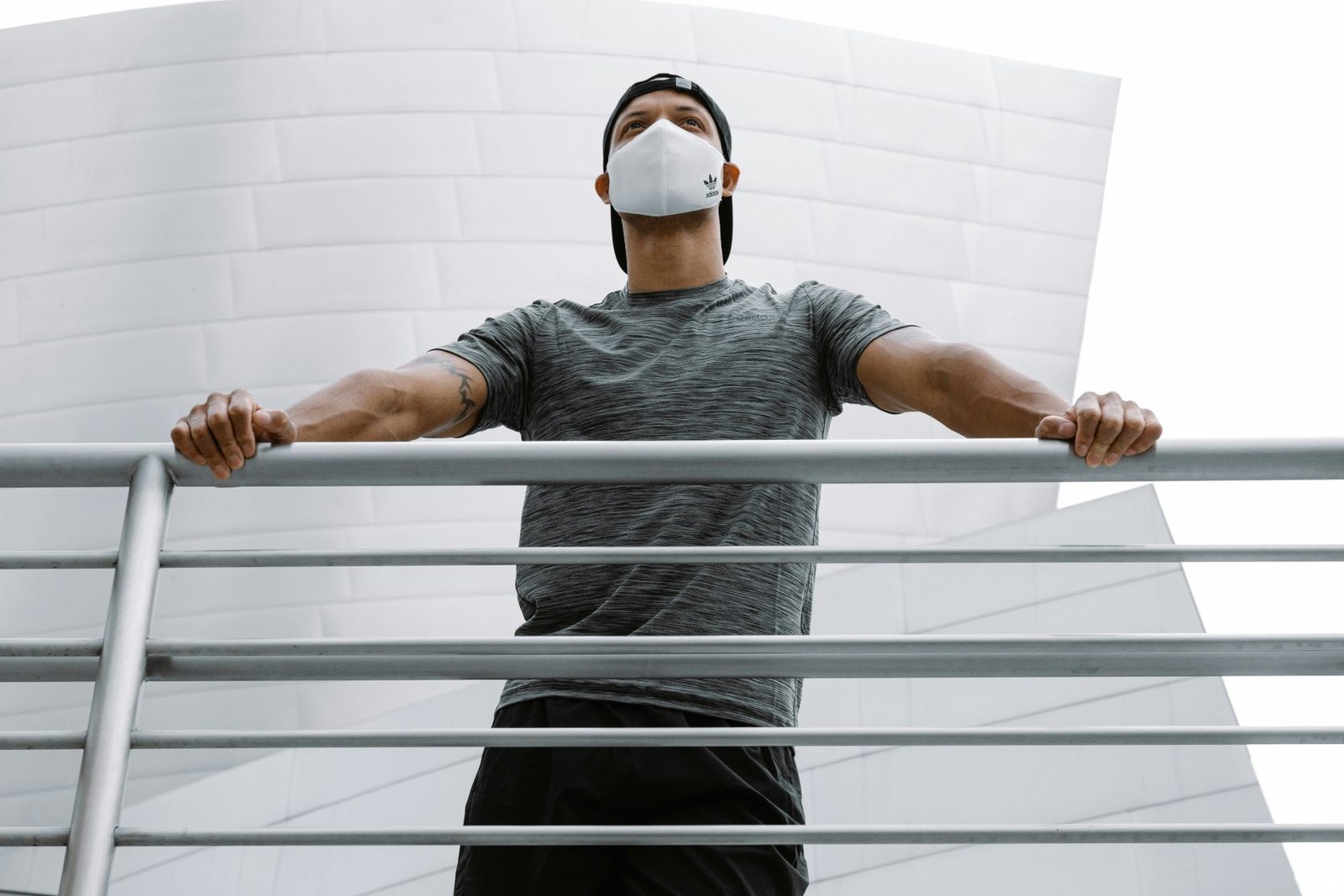
To an extent. N95 and N99 masks can filter a meaningful proportion of PM2.5 particles and are better than nothing for very short, easy efforts at AQI levels in the moderate to poor range. The honest reality is that running at any real pace with a mask on is deeply uncomfortable. The same resistance to airflow that makes the mask effective also makes breathing considerably harder, inflates perceived effort and causes most runners to abandon it within a few minutes of the effort picking up.
Purpose-built running masks exist and handle the fit and breathing resistance better than a standard N95, but even these have meaningful limitations once you move beyond a very easy jog. Masks are most useful for the walk or warm-up before a run in borderline conditions, not for the run itself. If the AQI is high enough that you feel you need a mask to run, the better decision is usually to move the session indoors.
The Bottom Line on Running in Air Pollution
North India’s pollution season is real and it is not going anywhere soon. But it does not have to break your training if you plan around it. Check your AQI before you leave the house, not after. Treat 200 as your firm outdoor limit. Rethink the automatic early morning run in December and January. Stop treating treadmill days as inferior training. And on your worst air days, the session you protect most is your lungs, not your mileage target. The AQI data to make every one of these decisions is free and sitting on your phone right now.
Photo by Oso Production on Unsplash