📅 Dates: 13–15 November 2026
📍 Location: Mui Wo, Lantau Island, Hong Kong SAR
🏃 Distances: TL100 (104km) · TL50 (45km) · TL25 (27km) · TL15 (15km)
⛰️ Elevation gain: TL100: 4,500m+ · TL50: 2,500m+ · TL25: 1,100m+ · TL15: 500m+
⏱️ Cutoff: TL100: 27 hours · TL25: 6 hours
🕢 TL100 start: Friday 13 November, 19:30 HKT — Mui Wo River Silver Garden
💰 Entry fees: TL100 from HK$2,150 · TL50 from HK$1,050
🎟️ Registration status: TL100 OPEN · TL50 / TL25 / TL15 — FULL
💎 UTMB Running Stones: TL100: 3 Stones · TL50: 2 Stones · TL25 & TL15: 1 Stone each
🌐 Official site: translantau.utmb.world
You land at Hong Kong International Airport — one of the busiest in the world — step into a blue Lantau taxi and thirty minutes later you’re standing on a quiet beach in a tiny village surrounded by wooded hills and water buffalo. That contrast is the whole point of TransLantau by UTMB, and it doesn’t get less startling no matter how many times you make that trip.
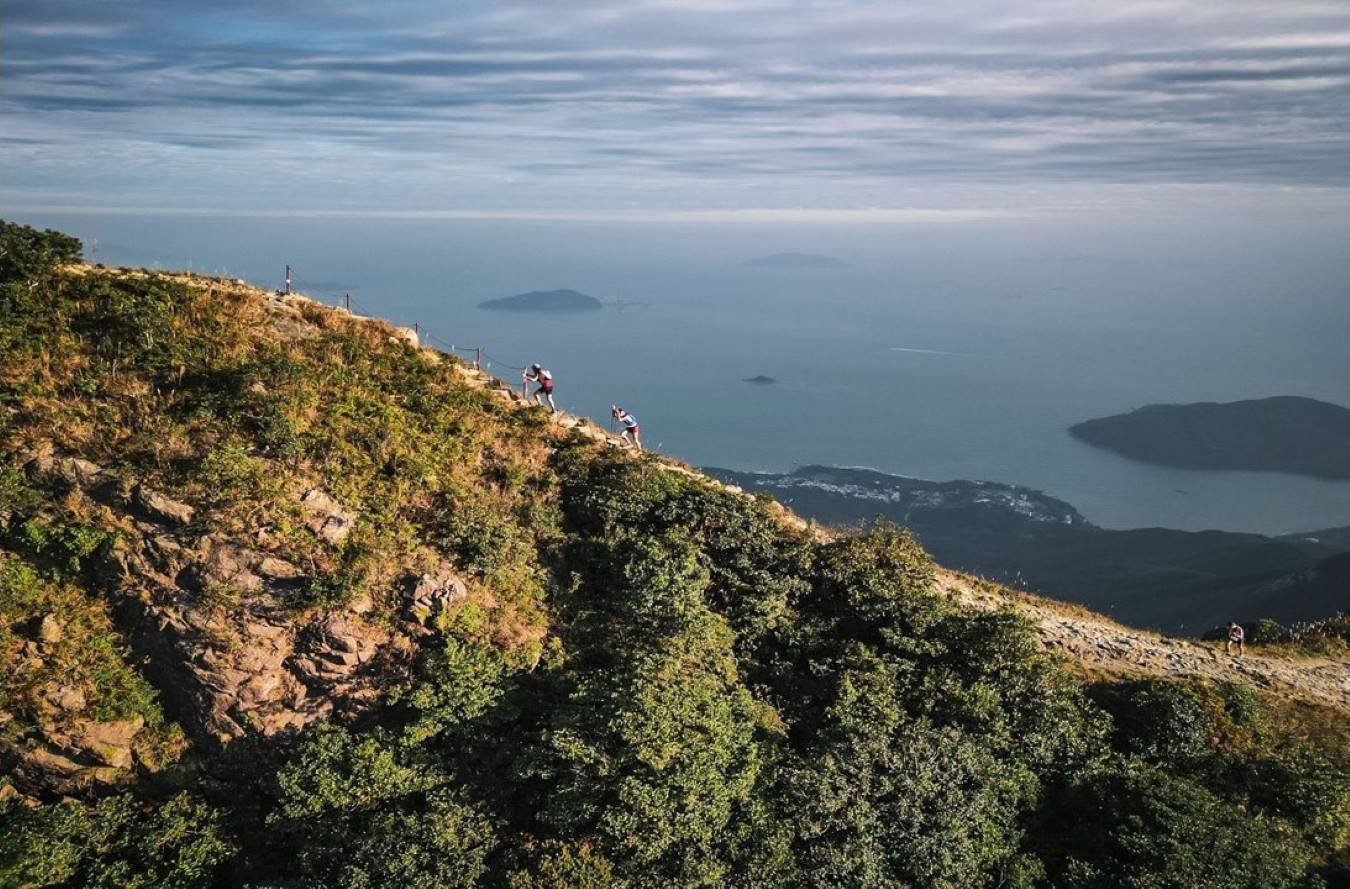
Lantau Island is Hong Kong’s largest territory. More than half of it is protected country park, completely untouched by the urbanisation that has turned the north of the island into a modern new town. The race course threads through both parks, climbs Hong Kong’s second-highest peak at 934 metres, drops into a stilt fishing village that looks like it belongs to another century, and comes back through subtropical jungle and exposed ridge lines — all within a territory you can cross in a taxi. There is nowhere else in trail running quite like it.
The 2026 edition brings a restructured distance lineup. The old TL120 and TL80 formats are gone. In their place: a 104km TL100 as the flagship race, a 45km TL50 for the half-distance crowd and two shorter options for newcomers to the UTMB universe. The TL50, TL25 and TL15 filled up fast after registration opened in April. The TL100 still has places as of August 2026, which means if you want three Running Stones and a genuine shot at qualifying momentum toward Chamonix, the entry window is still open.
This guide covers every distance but goes deepest on the TL100 — the night-start 27-hour journey across Lantau that tests everything you have. If you’re considering it, read the strategy section before you do anything else.
TransLantau by UTMB 2026 — Race at a Glance
| Distance | Elevation | Date & Start Time | Cutoff | UTMB Stones | Status |
|---|---|---|---|---|---|
| TL100 — 104km | 4,500m+ | Fri 13 Nov · 19:30 HKT | 27 hours | 3 Stones | ✅ Open |
| TL50 — 45km | 2,500m+ | Sat 14 Nov · TBC | TBC | 2 Stones | 🔴 Full |
| TL25 — 27km | 1,100m+ | Sun 15 Nov · TBC | 6 hours | 1 Stone | 🔴 Full |
| TL15 — 15km | 500m+ | Sun 15 Nov · TBC | TBC | 1 Stone | 🔴 Full |
| Race Detail | Information |
|---|---|
| Organiser | UTMB Group / Clement Dumont & Sabrina De Nada-Dumont |
| TL100 Start location | Mui Wo River Silver Garden, Lantau Island, Hong Kong |
| Course type | 80% singletrack trail, two country parks, loop course |
| Highest point | Fung Wong Shan (Lantau Peak / Phoenix Mountain) — 934m, HK’s 2nd highest |
| TL100 Aid stations | 10 stations. Drop bag at Ngong Ping (~km 50) |
| Pacers | Not allowed (any distance) |
| Support crew | Allowed at designated checkpoints only |
| Mandatory gear | Headtorch (x2 with spare cells), waterproof jacket, mid-layer, survival blanket, whistle, 1L water capacity, collapsible cup, phone with LiveTrail + HKSOS |
| Tracking | LiveTrail app — mandatory. Airplane mode forbidden during race |
| Wildlife | Water buffalo, feral cattle (protected). Village dogs at Ngong Ping and Tai O can be aggressive at night |
| Title sponsors | HOKA · Suunto · Tudor · NAAK |
TransLantau by UTMB 2026 Registration — How to Enter
Registration opened on 14 April 2026 at 18:00 Hong Kong time with no pre-registration ballot or lottery — first come, first served. UTMB Index holders got a 48-hour priority window with an early-bird discount. After that, registration opened to everyone. The TL50, TL25 and TL15 are now full. The TL100 (104km) is still open as of August 2026.
Registration alert: TL50 / TL25 / TL15 are sold out. Only the TL100 has remaining places. Entry fills faster each year — if you are considering the 2027 edition, monitor the official site from March and set a calendar reminder for the April opening. Priority access goes to runners with a valid UTMB Index during the first 48 hours.
| Race | Early Bird (Priority 48hrs) | Standard | Status |
|---|---|---|---|
| TL100 — 104km | HK$2,150 | HK$2,300 | ✅ Open |
| TL50 — 45km | HK$1,050 | HK$1,200 | 🔴 Full |
| TL25 — 27km | N/A | Check official site | 🔴 Full |
| TL15 — 15km | N/A | Check official site | 🔴 Full |
Registration requires a UTMB account and credit card payment (Visa or Mastercard). The early-bird rate applies only during the first 48 hours of opening, is limited in quantity and is strictly first-come, first-served. There is no guarantee of getting it even if you have a valid UTMB Index.
Transfer and refund policy: You can transfer your entry to a shorter distance until 4 weeks before race day — no refund is issued in that case. Transfers to a longer distance are at the race director’s discretion and only available if that distance has places. Transfers are not allowed if the new distance is sold out. No cash refunds are offered for voluntary withdrawals. Contact translantau@utmb.world for transfer requests. The Paths to Parenthood Policy (covering pregnancy, surrogacy, adoption and Medically Assisted Reproduction) applies — contact the organiser directly if this applies to you.
Entry requirements for TL100: This is a 3-Stone UTMB World Series race. Direct entry is available without needing a minimum UTMB Index score — but you must be physically prepared for a 104km mountain race with 4,500m of elevation gain in under 27 hours. Check the official regulations page for any experience-based requirements that may have been introduced for 2026. View regulations here.
Register at: translantau.utmb.world/races-runners/runners/registration
What Makes TransLantau by UTMB Worth Running?
The setting is genuinely unlike anything else in trail running
Hong Kong is a city of eight million people. Lantau Island sits within that city but might as well be another planet. More than half of the island is designated country park, completely ring-fenced from development. The race course weaves between dense subtropical jungle, hand-laid stone staircases that are centuries old, windswept ridge lines with views of the South China Sea, and coastal paths above fishing communities that still work the water the traditional way. You pass the Big Buddha at Ngong Ping — a 34-metre bronze statue sitting at 268 steps above the Ngong Ping plateau — in the middle of the night. You run through Tai O, nicknamed the “Venice of Hong Kong” for its colourful stilt houses, as dawn breaks over the harbour. No other trail race in Asia packs this density of extraordinary moments per kilometre.
It earns you three UTMB Running Stones toward Chamonix
The TL100 is a 3-Stone event, which is significant in the UTMB World Series points ecosystem. Finishing it puts meaningful progress toward the Running Stone thresholds required to enter the UTMB Finals in Chamonix. For runners in Asia, the Pacific and the Indian subcontinent, TransLantau is one of the most accessible routes into the World Series stone system — Hong Kong’s airport is a well-connected hub with direct flights from across the region. If your goal is Chamonix and you’re building your stone count, this race belongs on your calendar.
It suits runners who want the full ultra experience without the European price tag of getting there
For runners based in Asia, TransLantau is the closest thing to a UTMB-standard event within reach. Flights from India, Singapore, Thailand, Japan and mainland China are short and relatively affordable. Hong Kong is an English-speaking city with excellent infrastructure and one of the most efficient public transport systems in the world. Race logistics — getting to the start, following aid station buses across the island, navigating the finish area — are manageable even if it’s your first time in HK. And if you have a couple of extra days, the city itself is worth it.
The course is honest about what it demands
Some trail races market themselves as harder than they are. TransLantau goes the other way. The stone steps alone — thousands of hand-laid stairs on the approach to and descent from Lantau Peak — make this course significantly more quad-punishing than its elevation chart suggests. The night start adds another variable most runners underestimate: heading out at 19:30, you hit the biggest climbs in the dark, deal with Lantau’s notoriously aggressive village dogs on the night section and then face the back half of the race in the heat of the following day. It is a proper test. The 27-hour cutoff respects that.
Every distance gives you access to Lantau’s trails
If the TL100 is not for you yet, every other distance runs through country park terrain that most people never see on a normal Hong Kong visit. The TL25 covers the Chi Ma Wan Peninsula and Lo Yan Shan. The TL15 is the most accessible entry point into the UTMB universe and a realistic target for runners new to trail. Yes, the TL50/TL25/TL15 are full for 2026 — but knowing what each distance offers helps you plan for the 2027 edition with the right target in mind.
Wildlife, monsoon heritage and the absence of crowds on course
Water buffalo roam free across Lantau’s trails and are protected by law. You will almost certainly encounter them, especially on the southern trails. They are generally calm and will move away if you give them space and time. The village dogs near Ngong Ping and Tai O are a different matter — the race briefing advises hiking (not running) through those stretches at night and using a water bottle or trekking pole as a deterrent if needed. These are not theoretical concerns. Treat them seriously and the course rewards you with absolute solitude for long stretches — this is not a race where you’re shoulder to shoulder with thousands of runners all the way to the finish.
The Course — How TransLantau by UTMB Actually Runs
TL100 Course at a Glance
- Total distance: 104km
- Total elevation gain: 4,500m+
- Course type: Loop — starts and finishes at Mui Wo River Silver Garden
- Trail surface: 80% singletrack. Stone staircases, jungle trail, coastal path and exposed ridge line
- Highest point: Fung Wong Shan / Lantau Peak, 934m
- Key landmarks: Ngong Ping / Big Buddha, Tai O fishing village, Discovery Bay
- Aid stations: 10, including Pak Kung Au, Shui Hau, Shek Pik, Tai O, Ngong Ping, Ham Tin, Chi Ma Wan, Discovery Bay
- Drop bag: Ngong Ping aid station, approximately km 50
- No pacers. Support crew at designated checkpoints only.
- Download course map and GPX: Official TL100 race page
The Opening Act: Mui Wo to the South Coast (km 0–25 approx)
The TL100 night start feels electric. You’re at the river garden in Mui Wo at half past seven in the evening, headlamp on, surrounded by runners from a dozen countries, with the beach and dark wooded hills behind you. The opening section is relatively forgiving — the kind of coastal trail that makes you think this might not be so bad. That thought is exactly the problem.
The early kilometres skirt the southern edge of the island through beautiful country park terrain with manageable gradients. Shui Hau and the coastal section toward Shek Pik deliver the first real climbing but nothing catastrophic yet. The air is cool. The pace is tempting. Most first-timers at TransLantau run this section too fast by a margin of 10–15%. They pay for it in the mountains.
The Big Test: The Approach to Lantau Peak (km 25–50 approx)
This is where the race genuinely begins. Lantau Peak — Fung Wong Shan, Phoenix Mountain — rises to 934 metres and is the defining physical challenge of the TL100. The climb involves long sections of ancient stone staircases, worn smooth by centuries of use and utterly unforgiving on running muscles. Your GPS tells you you’re moving at a certain speed. Your legs don’t know speed on stone stairs. They just know vertical, vertical, vertical.
Here is what the elevation profile doesn’t show you: stone steps engage your muscles completely differently from a smooth dirt gradient. They force a consistent knee-drive and hip-extension pattern that breaks down quad tissue faster than any comparable ascent. Runners who have trained exclusively on trails without step practice often feel the onset of quad failure here, somewhere between km 30 and 45, while they still have 60-70km ahead of them.
The summit ridge is exposed and, at night in November, can be genuinely cold and windy. Your waterproof and mid-layer are not optional items. Multiple runners have been pulled from the course due to hypothermia on this section in previous editions.
The Halfway Landmark: Ngong Ping and the Big Buddha (km ~50)
Ngong Ping is the drop bag point and the psychological midpoint of the race. Arriving here — usually somewhere between midnight and 4am for most recreational runners — is one of the great sensory experiences in all of trail running. The enormous bronze Buddha, 34 metres tall, is lit up against the sky. The Po Lin Monastery sits silent below it. You’re exhausted, your legs have been through Lantau Peak, and you’re standing in front of one of the most unexpected landscapes imaginable.
Use this stop properly. Change socks if you packed them in your drop bag. Eat real food. Sit for five minutes and let your systems recalibrate. The temptation is to keep moving. The runners who respect Ngong Ping as a genuine reset point — 10 to 15 minutes, not 2 — almost always run a better second half.
The Descent and the Fishing Village: Ngong Ping to Tai O (km 50–65 approx)
From Ngong Ping you descend toward Tai O on the northwest tip of the island. This looks like a gift on the profile but feel it the next time you run 50km on stone stairs before attempting a sustained technical descent. Every runner who blasted through the south coast section arrives here with significantly less quad integrity than they thought they had. The descent to Tai O is where the difference between a conservative first half and an aggressive one becomes impossible to ignore.
Tai O itself is extraordinary. Depending on your pace, you arrive at this ancient stilt fishing village sometime between 3am and 7am. At 5am, the fishermen are already up. The wooden walkways over the water creak under your feet. The coloured houses reflect in the harbour. You’re running through a living museum while completely wrecked. It is surreal and beautiful and one of those moments that reminds you why you sign up for things like this.
Tai O is also where the village dogs are most active. Don’t run through this section at night. Walk. Have your poles or a water bottle ready. This is not the time for heroics.
The Long Road Home: Tai O to Mui Wo (km 65–104 approx)
The back half of the TL100 — roughly 40 kilometres from Tai O back to Mui Wo — is where the race empties its pockets. The accumulated quad damage from the stone stairs, the descent to Tai O, the broken sleep and the now-rising sun combine into something genuinely hard. Ham Tin, Chi Ma Wan and the approach to Discovery Bay deliver continued elevation variation — nothing as dramatic as Lantau Peak but on legs this wrecked, every short climb feels personal.
The coastal trail sections in this stretch are beautiful and exposed. If you started at 19:30 and you’re still running at 9 or 10am, you now have direct sun and rising temperatures on open trail with limited shade. Hydration management through the second half of the race matters far more than most runners plan for.
Discovery Bay — a self-contained residential community on Lantau’s northeast coast — marks the final significant waypoint before Mui Wo. It’s accessible by ferry from Hong Kong island, which is useful context for support crews. From Discovery Bay, the trail winds back to finish at the River Silver Garden where you started the night before. Crossing that finish line in Mui Wo is earned in the fullest sense of the word.
Race Strategy: How to Run TransLantau Without Blowing Up
Strategy for the TL100
The trap: the first 25km feel easy. The coastal section from Mui Wo through the southern trails is genuinely runnable and the cool night air makes pace feel deceptively sustainable. Don’t trust it. Your target effort in this section should feel almost embarrassingly conservative — you want to arrive at the Lantau Peak climb with full muscular capacity. Runners who start 10% too fast in the first quarter almost universally blow up between Ngong Ping and Tai O.
The stone stairs will cost you more than the elevation chart shows. Train specifically on stairs and steps in your build-up. If you’re coming from flat terrain, do at least four to six sessions on staircases in the final eight weeks. The repetitive knee-drive on stone steps depletes quads faster than any dirt gradient of equivalent height. Know this before you start and pace the ascent to Lantau Peak by effort, not by speed.
The Ngong Ping checkpoint is your time audit. At the Big Buddha aid station at approximately km 50, check your elapsed time against your target finishing time. If you have used more than 48–50% of your total planned race time to reach Ngong Ping, you are behind schedule and need to reassess. If you’ve used less than 45%, you may have room to ease slightly into the second half. Most recreational runners should target arriving at Ngong Ping with roughly 55% of their allowed time still remaining.
Tai O dogs — walk, don’t run. Particularly at night and in the early morning hours, the village dogs near Ngong Ping and Tai O can be aggressive. Walk calmly through both settlements. If a dog approaches, hold your ground, face it and use a water bottle or trekking pole as a deterrent. Running triggers chase behaviour.
Hydration in the second half matters more than the first. The overnight section from Mui Wo to Tai O can lull you into under-drinking because it’s cool and you don’t feel hot. By the time the sun is up and you’re on the exposed coastal trails heading back to Mui Wo, dehydration combined with quad failure is the most common cause of DNF in the back half of the race. Drink to schedule, not to thirst. NAAK electrolytes are available at aid stations.
Weather contingency: November brings Hong Kong’s best trail weather but wind chill above 800m can be significant. The mandatory waterproof and mid-layer are not tick-box items — wear the mid-layer on the Lantau Peak ridge even if you feel warm. Temperature drops fast when you slow down at altitude. Carry HK$200+ in cash and an Octopus Card as recommended — they can be genuinely useful if you need to withdraw from the course.
Poles: If you plan to use trekking poles, you must carry them for the entire race — you cannot pick them up at Ngong Ping. Decide before the start. Given the stone stairs and the quad demands of this course, poles are highly recommended for recreational runners targeting the back of the pack.
TransLantau by UTMB 2026 — Race Weekend Schedule
The full race weekend schedule is not yet published for 2026. Confirmed start times are listed below. Check translantau.utmb.world for the complete schedule including packet pickup, briefings and ceremonies closer to race day.
| Date | Event | Time (HKT) | Location |
|---|---|---|---|
| Thu–Fri 12–13 Nov | Race Packet Pickup / Expo | TBC | Mui Wo, Lantau Island |
| Fri 13 Nov | TL100 Start | 19:30 HKT | Mui Wo River Silver Garden |
| Sat 14 Nov | TL100 ongoing / TL50 Start | TBC | Mui Wo |
| Sat 14 Nov | TL100 Cutoff | 22:30 HKT (27 hours) | Mui Wo finish |
| Sun 15 Nov | TL25 Start / TL15 Start | TBC | Mui Wo |
| Sun 15 Nov | Awards Ceremony | TBC | Mui Wo event village |
Expo and Packet Pickup
Race Packet Pickup — TransLantau by UTMB 2026
Location: Mui Wo event village, Lantau Island, Hong Kong
Dates: Thursday and Friday (12–13 November 2026) — exact hours TBC
TL100 runners: Overseas runners can collect on Saturday morning (14 November) if arriving from outside Hong Kong. Confirm directly with the organiser.
What to bring: Photo ID and your UTMB race confirmation. Mandatory gear check takes place at bib collection — have your full gear list ready.
Drop bags: TL100 runners collect a UTMB-branded drop bag at the expo. This bag is transported to the Ngong Ping aid station (~km 50). No custom bags — only the official UTMB bag is accepted.
2026 schedule: Full expo hours not yet published. Check translantau.utmb.world/races-runners/runners/race-guide for updates closer to race day.
Weather — What to Expect on Race Day
November is the best month of the year to run in Hong Kong. The summer humidity breaks by October and race weekend typically delivers clear skies, manageable temperatures and dry trails. The caveat is altitude: the summit ridge of Lantau Peak at 934m is significantly colder and windier than the start area at sea level, and the temperature drop can catch runners off guard at 2 or 3am when energy levels are already compromised.
| Period | Temperature | Conditions | What to Know |
|---|---|---|---|
| Race start (19:30) | 14–18°C | Cool, low humidity | Ideal running conditions. Don’t be lulled into starting too fast. |
| Night (midnight–4am) | 12–16°C | Can be windy on exposed ridges | Lantau Peak ridge above 800m: wind chill real. Mandatory jacket and mid-layer — wear them. |
| Dawn (5–7am) | 14–18°C | Clear, warming | Tai O section at dawn. Spectacular light. Rising temps from here. |
| Morning (8am+) | 20–24°C | Sunny, moderate breeze | Coastal trails exposed. Sun protection and hydration critical for back-of-pack TL100 runners. |
| General November | 18–23°C avg | Mostly dry. Avg 8hrs sunshine. ~3mm rainfall | Best weather window in Hong Kong. Typhoon season is over. Trail conditions mostly firm. |
The major weather risk is not heat or rain — it’s the wind chill on the Lantau Peak summit combined with a slowing pace in the early hours. Bring your waterproof jacket and mid-layer. Check HKSAR weather updates from the Hong Kong Observatory in the week before the race.
Prize Money and Elite Runner Information
TransLantau by UTMB is a UTMB World Series event. As of 2026, specific prize money for the individual race is not publicly listed by the organiser. Elites earn Running Stones that contribute to their UTMB World Series Finals qualification, and top finishers at those Chamonix finals compete for significant prize money — up to €10,000 per discipline for the race winner.
| Level | Prize Structure |
|---|---|
| TransLantau (event level) | Not publicly confirmed. Check official site for 2026 announcement. |
| UTMB World Series Finals — Chamonix | Up to €10,000 for winners. Top 10 finishers rewarded in each distance category. Equal prize money for men and women. |
Elite runner entry: Separate elite application process applies. Contact translantau@utmb.world for details. Elite bibs are distinct from the general registration pool and are not subject to the standard entry fees. Selected elite athletes may receive complimentary or subsidised entry. Applications are reviewed by the race director.
Past Results — 2025 Defending Champions
The 2026 race introduces new distances (TL100, TL50, TL25 and TL15), replacing the 2025 format of TL120, TL80, TL50 and TL25. The results below are from the 2025 edition. The closest predecessor to the 2026 TL100 is the TL80 (79km) in terms of stone rating, and the TL120 (116km) in terms of gross distance.
2025 TL120 — 116km / 4 Running Stones
| Place | Athlete | Country | Time |
|---|---|---|---|
| Women | |||
| 1st | Jenny Quilty | Canada 🇨🇦 | 18:30:13 |
| 2nd | Arika Ito | Japan 🇯🇵 | 19:45:41 |
| 3rd | Laura Meuret | France 🇫🇷 | 22:22:44 |
| Men | |||
| 1st | Harry Jones | Great Britain 🇬🇧 | 15:12:00 |
| 2nd | Cristofer Clemente Mora | Spain 🇪🇸 | 15:23:00 |
| 3rd | Salomon Wettstein | Switzerland 🇨🇭 | 15:52:32 |
2025 TL80 — 79km / 3 Running Stones
| Place | Athlete | Country | Time |
|---|---|---|---|
| Women | |||
| 1st | Ki Chun Wong | Hong Kong 🇭🇰 | 10:46:44 |
| 2nd | Tsz Kei Wong | Hong Kong 🇭🇰 | 11:45:04 |
| 3rd | Shi Qiong Liang | Hong Kong 🇭🇰 | 12:35:12 |
| Men | |||
| 1st | John Ray Onifa | Philippines 🇵🇭 | 7:59:20 |
| 2nd | Disi Liang | China 🇨🇳 | 9:11:41 |
| 3rd | Ryuta Iwai | Japan 🇯🇵 | 9:31:06 |
2025 overall numbers: 2,474 starters across all four races. 1,944 finishers. 4,105 Running Stones earned. The event attracted competitors from across Asia, Europe and the Americas with the 2025 TL120 podium particularly reflecting strong international fields.
Spectator Guide — Where to Watch at TransLantau
Watching TransLantau requires some planning — the course is spread across a large, car-free island — but the bus network and Lantau taxis make most key points reachable. The most satisfying viewing spots are Mui Wo (start and finish, easy ferry access), Ngong Ping (Big Buddha plateau, accessible by bus or cable car) and Tai O (the stilt village, accessible by bus).
| Location | Race Coverage | How to Get There | Best For |
|---|---|---|---|
| Mui Wo | TL100 start + all distances finish | Ferry from Central Pier 6 (35–55 min). Bus 3M from Tung Chung. | TL100 night start atmosphere and all finish line celebrations |
| Ngong Ping | TL100 mid-race (~km 50). Drop bag point. | Bus from Mui Wo (Bus 2), Tung Chung (Bus 23) or Tai O (Bus 21) | Seeing runners pass the Big Buddha in the middle of the night — one of the most surreal moments in trail running |
| Tai O | TL100 approximately km 55–65 area | Bus 1 from Mui Wo. Bus 11 from Tung Chung. | Dawn atmosphere in the stilt village. Extraordinary backdrop. |
| Pak Kung Au | Early TL100 checkpoint | Buses 3M / 11 / 11A / 23 from Tung Chung and Mui Wo | Seeing the field spread out early in the race |
| Discovery Bay | Late TL100 (pre-finish) | Ferry from Central Pier 3 then internal DB bus | Seeing runners in the final stretch before Mui Wo |
Spectator logistics: Blue Lantau taxis operate only on Lantau Island. If you’re coming from Hong Kong Island or Kowloon you’ll need to interchange to a blue taxi at Tung Chung. Get an Octopus Card — it works on all buses and ferries and avoids the need for exact change. Download the NLB bus app for live Lantau bus schedules. Check the NLB Lantau bus schedule before race day. Night bus frequency is lower — plan your return journey before midnight service cuts.
Where to Stay for TransLantau by UTMB
Mui Wo, the race village, is the obvious base — you’re minutes from the start, the finish and the expo, and you won’t have to navigate early-morning ferry or bus logistics at race time. The catch is that Mui Wo accommodation is limited and fills up fast. Book as soon as you register. If Mui Wo is full, Tung Chung (on Lantau) or Hong Kong Island are workable alternatives with regular transport links.
| Zone | Options | Distance to Start | Price Range | Notes |
|---|---|---|---|---|
| Mui Wo (Lantau) — Best choice | Silvermine Beach Resort (official partner), Seaview Holiday Resort, Silverview Resort, Mui Wo Inn | 2 min – 10 min walk | HK$650–2,500+/night | Book immediately after registering. Sells out months in advance. Silvermine Beach Resort: silvermineresort.com |
| Tung Chung (Lantau) | Novotel Citygate, various chain hotels near MTR | Bus 3M — 45 min | HK$800–2,000+/night | Near airport and MTR. Good transport. More hotel choice than Mui Wo. |
| Sheung Wan / Central (HK Island) | Wide range of hotels and serviced apartments | Ferry to Mui Wo, 35–55 min | HK$1,000–4,000+/night | Good for pre/post-race city exploration. Check last ferry time — night services are limited. |
| Tsim Sha Tsui / Kowloon | Extensive hotel options in all budget ranges | Star Ferry to Central + Mui Wo ferry — 1.5 hrs total | HK$700–3,500+/night | Furthest from the race. Best for runners combining the event with a longer HK visit. |
| Budget / Camping | Nam Shan Campsite (AFCD), HK Playground Association (HK ID only) | 2.5km from Mui Wo (bus access) | Low cost / HK ID only | Nam Shan campsite: AFCD website |
International Runners — Visa and Getting to Mui Wo
| Country / Region | Visa Requirement for Hong Kong |
|---|---|
| UK, EU, USA, Canada, Australia, NZ | Visa-free entry, typically 90 days |
| Japan, South Korea, Singapore | Visa-free entry |
| India | Pre-approval visa required. Apply via Hong Kong Immigration Department. Allow several weeks. |
| China (Mainland) | Permit required (Exit-Entry Permit). Contact Hong Kong Immigration for current rules. |
| Other nationalities | Check current rules at Hong Kong Immigration Department |
Getting to Mui Wo from Hong Kong International Airport (HKIA):
- Blue Lantau Taxi — The quickest option. Direct from airport to Mui Wo, approximately 30 minutes, approximately HK$180. Pay with cash or Octopus Card (no credit card). Blue taxis are only licensed to operate on Lantau Island — this is a direct route.
- Via Tung Chung MTR + Bus 3M — Take Airport Express to Tung Chung station (approximately 10 min), then Bus 3M to Mui Wo Market (approximately 45 min). Total approximately 55–65 min. More economical.
Getting to Mui Wo from Central (Hong Kong Island):
- Ferry from Central Pier 6 — Fast ferry: 35 min. Slow ferry: 55 min. Then 8-minute walk to race venue. Check Sun Ferry timetable for current schedules. First ferry from Mui Wo leaves early morning — check last service times if attending night events.
Essential tools: Get an Octopus Card on arrival — it covers all buses, ferries and most taxis on Lantau. Buy a local SIM card at the airport for data connectivity. Install LiveTrail and HKSOS apps before you leave home — they are mandatory race requirements for all distances.
A Short History of TransLantau by UTMB
TransLantau traces its roots to 2016 when Clement Dumont and Sabrina De Nada-Dumont launched a local trail event on Lantau Island that grew quietly through the late 2010s into one of Hong Kong’s signature endurance races. The island’s unique combination of protected country park, dramatic topography and extraordinary cultural landscape — the Big Buddha, Tai O’s stilt houses, the centuries-old hiking trails — gave the race a character that was impossible to replicate anywhere else in Asia.
The event was selected to join the UTMB World Series in 2021, with a planned debut on the global circuit in 2022. COVID-19 forced the cancellation of that edition. The 2023 race became TransLantau’s true arrival on the world stage and it made an immediate impression. UTMB co-founder Michel Poletti — who had wanted a Hong Kong race in the Series since its founding — came personally to run the inaugural 129km distance. The event drew runners from across Asia and Europe and established itself as the most internationally accessible of the UTMB events in the greater China region. Since 2023 the race has expanded each year, and the 2026 edition’s restructured distance format — with a 104km TL100 at the heart — represents a deliberate push to bring the flagship distance in line with the broader UTMB World Series 100K category standard.
Hong Kong itself has been a trail running city long before TransLantau existed. The MacLehose Trail, the Hong Kong Trail and the Lantau Trail are part of the city’s recreational DNA — hundreds of thousands of Hong Kong residents hike and run these paths every weekend. The UTMB partnership brought international visibility to terrain that locals had always known was extraordinary. For runners coming to Hong Kong for the first time, the discovery that wild mountain running exists within the boundaries of one of the world’s most urban places tends to be genuinely surprising. For runners coming back, it’s usually the reason they return.
FatMarathoner Verdict
TransLantau by UTMB is one of those races that earns its reputation through honesty rather than marketing. The course delivers exactly what it promises and more — the stone stairs humble you, the stone stairs humble you again on the way down, Tai O at dawn is unforgettable and the Big Buddha at 3am is the kind of image that stays with you for years. The night start adds genuine drama. The wildlife is real. The cutoffs are fair. The 27-hour window for the TL100 gives recreational runners a genuine shot if they train appropriately for the specifics of this course.
What holds this back from a perfect score is the lack of transparency around prize money, the fast sellout of all but the flagship distance (which needs better managing for future years) and the 2024 water shortage controversy at some checkpoints, which the organiser has not yet fully addressed publicly. Bring your own hydration capacity beyond the 1L minimum.
If you are building toward the UTMB Finals and looking for 3 Running Stones in Asia, this is the race. If you are looking for the best trail running experience in a major world city, this is also the race. If you’re an Indian runner targeting UTMB qualification, plan the visa application well ahead — but make this trip. There is nothing else like it on this side of the world.
Rating: 4.5 / 5 — Essential for UTMB aspirants in Asia. Extraordinary setting. Hard on quads. Prepare specifically for stone stairs.
How TransLantau by UTMB Compares
| Race | Distance | Elevation | UTMB Stones | Location | Season | International Access | What Makes It Unique |
|---|---|---|---|---|---|---|---|
| TransLantau TL100 | 104km | 4,500m+ | 3 | Hong Kong, Asia | November | Excellent — major hub airport | Wild island within a megacity. Stone stairs. Night start. Big Buddha at midnight. |
| UTMB Mont Blanc | 171km | 10,000m+ | Finals (direct) | France / Italy / Switzerland | August | Excellent — Chamonix well connected | The apex. Lottery entry for most. The race all others are measured against. |
| Chiang Mai Thailand by UTMB | Various (up to 100km+) | Varies | Up to 4 (Major) | Chiang Mai, Thailand | December | Good | Asia-Pacific Major. Jungle and mountain terrain. Direct Chamonix Finals path. |
| Vietnam Highlands by UTMB | Various (up to 100km) | Varies | Up to 3 | Vietnam | January | Moderate | Rice terraces, highland villages. Excellent for building stone count in Asia. |
| UTA by UTMB (100km) | 100km | ~4,400m+ | 3 | Blue Mountains, Australia | May | Good (Sydney hub) | Classic Australian trail race. Blue Mountains sandstone escarpments. Strong field. |
| TransJeju by UTMB | Various (up to ~100km) | Varies | Up to 3 | Jeju Island, South Korea | October | Good | Volcanic island terrain. UNESCO site. Strong domestic and Japanese field. |